RTA vs assembled cabinets comes down to labor, freight and schedule, not quality, when the box is the same. RTA saves freight and storage but adds assembly time; assembled costs more to ship but is ready to install on arrival.
Summary
- At ECG, RTA and assembled cabinets share the same plywood box, dovetail drawers, soft-close hardware and Shaker doors.
- RTA lowers freight volume and storage space but adds assembly hours that belong in your bid.
- Assembled saves crew time on site and suits tight schedules, but needs more space and a clear path to the room.
- You can mix both formats in one order; ask for both prices on the same quote request to compare.
What RTA and Assembled Cabinets Mean
RTA means ready-to-assemble. The cabinet ships flat-packed: sides, bottom, back, shelves, rails, doors and drawer boxes in one carton, with the hardware to put them together. Your crew assembles each box before it goes on the wall or the floor.
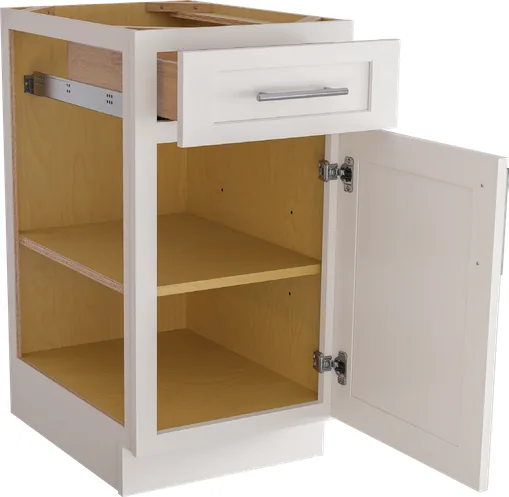
Assembled cabinets, also called pre-assembled, arrive built. The box is square and glued, the doors are hung, the drawers run on their slides and the hinges are set. The crew unboxes, levels, fastens and adjusts.
Neither term describes quality on its own. The words describe how the cabinet travels and who does the assembly. Quality lives in the materials and joinery, which you read on the spec sheet, not on the box label.
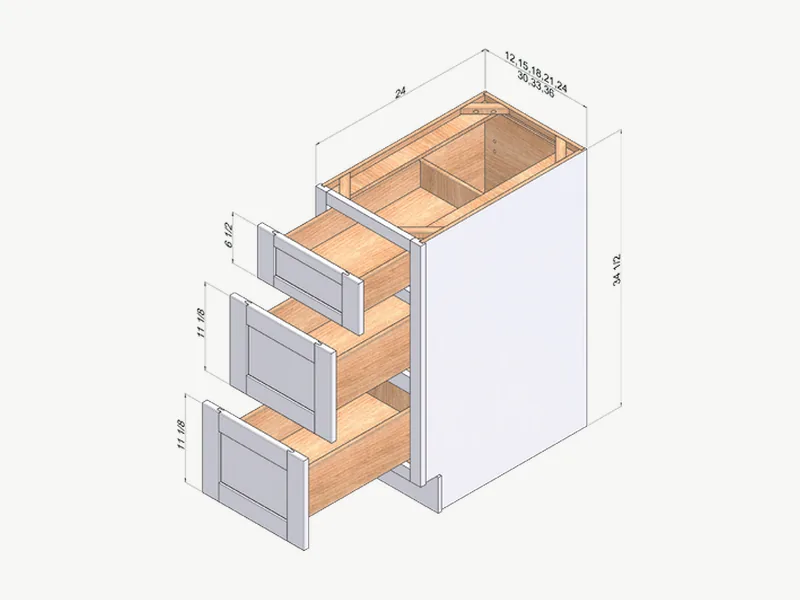
At ECG both formats use the same cabinet: a 1/2" plywood box, 3/4" plywood shelves, 5/8" solid wood dovetail drawers and soft-close hardware behind Shaker doors. Only the labor and the shipping change. See the full cabinet construction specs before you compare prices.
The term comes from ready-to-assemble furniture. In ECG cabinets, the dovetail joint in each drawer comes already made, in either format.
RTA vs Assembled: Side-by-Side Comparison
The table compares the two formats on the factors trade buyers price into a job. It assumes the same cabinet line in both columns.
| Factor | RTA | Assembled |
|---|---|---|
| Cabinet box and door | Same as assembled | Same as RTA |
| Freight | Flat cartons, smaller volume per cabinet | Full-size cartons, more volume per cabinet |
| Storage | Stacks tight in a warehouse or garage bay | Needs more floor space per unit |
| Labor before install | Assembly by your crew | None |
| Jobsite access | Fits narrow doors, stairs and elevators | Can be hard to move in tight spaces |
| Handling | Panels travel flat inside the carton | The built box travels whole and needs careful moving |
| Best for | Dealers stocking inventory, crews that assemble in-house | Contractors short on labor, builders on tight schedules |
Read the table as a set of trade-offs, not a ranking. A dealer with a warehouse and a slow week will weigh the rows very differently from a remodeler who has one install day before the countertop template.
How the Cost Really Compares
The cabinet line price is only one part of the cost. To compare RTA and assembled fairly, add up four numbers for each format.
1. Cabinet price
RTA usually prices lower per cabinet because the factory does less labor and the carton holds less air. Ask for both formats on your ECG quote request, so you see the gap on your own SKU list instead of guessing.
2. Freight
Flat cartons take less truck space than built boxes. On a large order, that difference in volume can change the freight line. On a single small kitchen it may barely move. Ask for both formats on the quote and compare the delivered total.
3. Assembly labor
RTA moves assembly from the factory to your crew. Multiply your crew's loaded hourly cost by the hours you expect to spend assembling. That is a real cost even when the crew is on salary, because those hours are not spent installing the next job.
4. Storage and handling
If cabinets wait before install, they occupy space you pay for. Flat cartons stack; built boxes do not. Count the square feet and the number of times the cabinets will be moved before they reach the room.
When the four numbers are close, the schedule usually decides. When they are far apart, the cheaper total wins. See how to price a kitchen cabinet job for the rest of the bid.
How Much Assembly Time RTA Adds
Plan on assembly time as a real line item. One contractor on ContractorTalk estimated about 8 hours to assemble the cabinets for a typical kitchen. Treat that as a starting point, not a rule: your crew's time will vary with kitchen size, the mix of drawer bases and wall units, and how many RTA kitchens they have built before.
Three things change the number more than anything else:
- Experience: the first RTA kitchen takes longer than the fifth, because the crew learns the sequence
- Setup: a clear, flat assembly area near the room is faster than assembling in a crowded garage
- Mix: drawer bases and specialty units take longer than plain wall cabinets
Use your estimate to compare on your own numbers: assembly hours times your crew's hourly cost, against the price difference between RTA and pre-assembled cabinets in your quote. If the labor cost is higher than the price gap, assembled wins on cost.
Is Quality Different Between RTA and Assembled?
Not when the box is the same. A cabinet's strength comes from the box material, the joinery, the drawer construction and the hardware. Those parts do not change because the cabinet ships flat.
What can change is the quality of the assembly. A factory assembles on jigs under controlled conditions. A crew assembles on site. A careful crew that follows the instructions, keeps the box square and seats every fastener builds a cabinet as solid as one built in the factory. A rushed assembly on an uneven floor can leave a box out of square, which shows up later as doors that do not line up.
So the quality question is really two questions. First, what is the cabinet made of? Read the spec sheet. Second, who will assemble it, and how? Plan the crew and the space. For a full checklist of what to look for, read are RTA cabinets good quality.
When RTA Is the Better Choice
RTA wins when freight, storage or access matter more than labor.
- You stock inventory as a dealer and floor space is limited
- Your crew already assembles cabinets between jobs
- The jobsite has narrow stairs, tight doors or a condo elevator
- You order ahead and store cabinets indoors until install
- The order is large enough that freight volume changes the delivered total
RTA also helps dealers who sell to homeowners and small remodelers, because flat cartons fit in a pickup or a van more easily. See wholesale RTA cabinets for what ships in each carton.
When Assembled Is the Better Choice
Assembled wins when labor is the bottleneck or the schedule is tight.
- Your crew is small and every install day counts
- The client wants the kitchen done as fast as possible
- A builder needs units set the day cabinets arrive
- You want fewer loose parts and less cardboard on site
- The path from the truck to the room is short and wide
Builders running several homes at once often prefer assembled cabinets, because the install crew can move from house to house without an assembly step in between. Remodelers working around a family that still lives in the home value the shorter time on site.
Delivery, Storage and Handling for Each Format
Both formats ship from ECG in 1–5 days to all 31 states and Washington, DC that ECG serves. What changes is how you receive and hold them.
Flat RTA cartons stack easily. Store them flat, off the floor, in a dry indoor space. Assembled cabinets are bulky; keep them upright, with nothing stacked on top that can crush a face frame.
For either format, count the cartons against the packing list, photograph any damage and note it on the delivery receipt before the driver leaves. The cabinet delivery inspection checklist walks your crew through it, and how to store cabinets before installation covers humidity and garages.
Can You Mix RTA and Assembled in One Order?
Yes. Many jobs mix both formats. A common split is assembled for the units that must go in fast, such as the sink base and the drawer bank, and RTA for wall cabinets, stock units or rooms at the end of a narrow hallway.
On the ECG quote request, choose "Both" and note which cabinets you want assembled. Ask for both prices on the units you are unsure about, so you can see the difference before you order.
Checklist Before You Choose
Answer these six questions and the format usually picks itself.
- Who assembles, and what does an hour of their time cost?
- How far and how tight is the path from the truck to the room?
- Will cabinets wait in storage before install, and is that space dry and indoors?
- How many days does the schedule allow between delivery and install?
- Is the order large enough that freight volume changes the total?
- Does the quote show both formats so you can compare the delivered cost?
If you are not set up with ECG yet, open a wholesale account first. Approved accounts get quotes in 1 business day; ask for RTA and assembled on the same request to compare. See how cabinet delivery works for timing.
Sources
Frequently Asked Questions
Are RTA cabinets lower quality than assembled?
Not when the box is the same. At ECG, RTA and assembled cabinets use the same 1/2" plywood box, 5/8" solid wood dovetail drawers, soft-close hardware and Shaker doors. The result depends on careful assembly, so keep the box square and follow the instructions.
Are RTA cabinets cheaper than assembled?
The cabinet price is usually lower because assembly labor and freight volume are lower. Compare the full cost, including your crew's assembly hours, freight and storage, before you decide.
How long does it take to assemble RTA cabinets?
It varies by crew, kitchen size and unit mix. One contractor estimate is about 8 hours for a typical kitchen. Treat it as a starting point and track your own time on the first job.
Can I order some cabinets RTA and some assembled?
Yes. On the ECG quote request choose "Both" and note which cabinets you want assembled. Ask for both prices on any unit you want to compare.
Does ECG install RTA or assembled cabinets?
No. ECG is a wholesale distributor and does not install. Dealers, builders and contractors handle assembly and installation with their own crews or installers.