The most useful cabinet showroom display ideas for a small Shaker showroom are a door sample wall in every finish, one working cabinet clients can open, and a design table with the Spec Book. All three fit in a small space without a full kitchen display.
Summary
- A row of real doors is the lowest-cost display that still sells.
- One real cabinet answers the quality question better than any brochure.
- Clients choose a kitchen, not a door.
- Put the most-requested finishes at eye level, near the entrance.
Start With a Door Sample Wall
A row of real doors is the lowest-cost display that still sells. Clients see the finish, the frame and the size of the Shaker profile at once.
ECG door samples are 11" x 14" and 3/4" thick, built like a full cabinet door. Hang one of each finish at eye level and label it with the name and code.
| Finish | Code | Look | Common pairing |
|---|---|---|---|
| Shaker White | SW | Clean, bright white | Lightwood or Evergreen island |
| Shaker Dove | SD | Warm off-white | Lightwood bases |
| Shaker Lightwood | SL | Natural wood grain | White or Dove uppers |
| Shaker Evergreen | SE | Calm sage green | White or Dove perimeter |
Order two sets: one stays on the wall, one goes home with clients for sign-off. See Shaker cabinet door samples in four finishes.
The door on that wall comes from Shaker furniture: a square five-piece frame around a flat panel, simple enough that clients judge the color, not the profile.
Put One Working Cabinet on the Floor
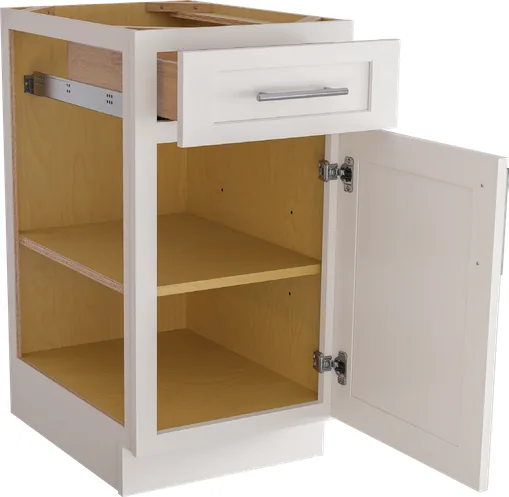
One real cabinet answers the quality question better than any brochure. Clients open the drawer, feel the soft-close and see the box.
With no minimum order, a dealer can buy a single assembled cabinet for display. Good choices:
- DB18-3 drawer base: shows the 5/8" solid wood dovetail drawers on soft-close glides
- B18 base: one drawer over a door, with the plywood box and adjustable shelf inside
- SB36 sink base: the cabinet clients ask about most in a remodel
- A roll-out tray or trash can organizer installed in the display base
Leave the door open and put a countertop sample on top. Sizes for each unit are in the base cabinet sizes and SKUs list.
Build Finish Boards With Counters and Hardware
Clients choose a kitchen, not a door. A finish board puts the door next to the countertop, the floor and the hardware it will live with.
Make one board per finish. Mount the door sample, then add two or three countertop chips, a floor sample and a knob and a pull in two metals. Swap the chips as your suppliers change.
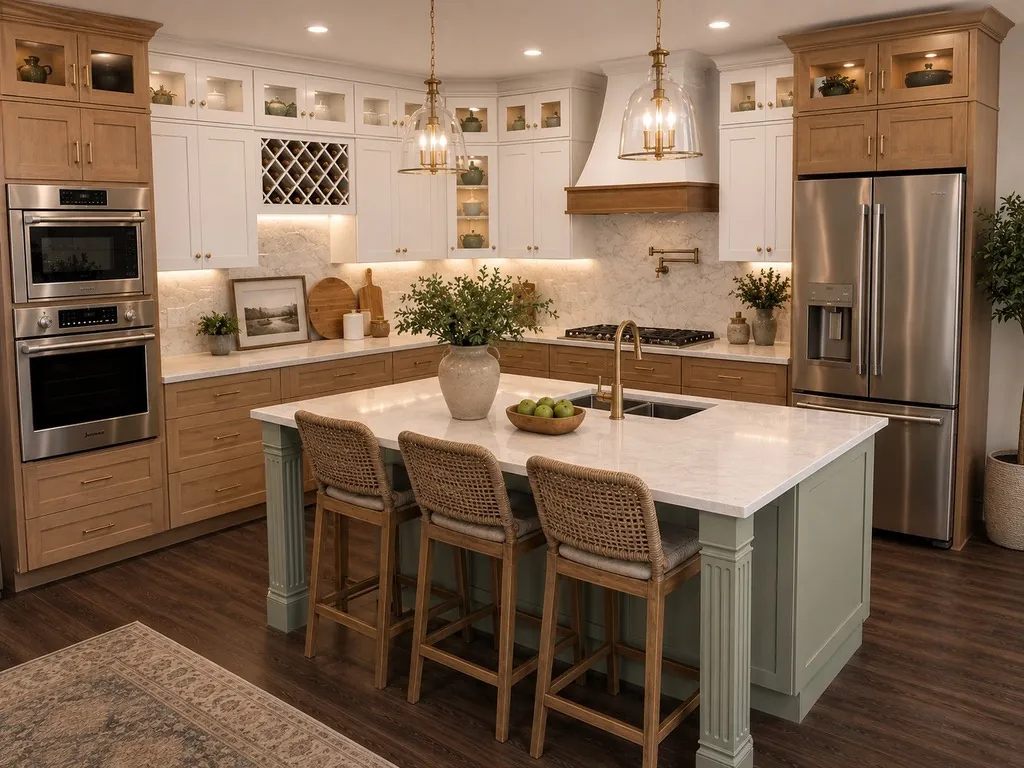
Mixed boards sell two-tone kitchens. A Lightwood door under a White or Dove door shows the most common pairing in seconds, and an Evergreen door shows how an island can stand out.
Use 2026 Color Data to Pick What to Feature
Put the most-requested finishes at eye level, near the entrance. Recent survey data points to wood and white.
The Houzz 2026 kitchen trends study of 1,780 homeowners found wood cabinets at 29%, white at 28%, off-white at 15% and green at 6%. That is one survey of homeowners renovating, not a sales forecast, but it matches what many dealers hear on the floor.
| Spot | Finish | Why |
|---|---|---|
| Front wall, eye level | Shaker Lightwood and Shaker White | Wood and white led the Houzz 2026 survey |
| Next to them | Shaker Dove | Off-white for clients who find white too bright |
| Accent or island board | Shaker Evergreen | Green is a smaller share but draws attention |
The wholesale Shaker cabinets page compares all four finishes in more detail.
Set Up a Design Table That Sells
The design table is where the sale closes. Keep everything needed to build a quote within reach.
- The ECG Spec Book with every SKU and its sizes
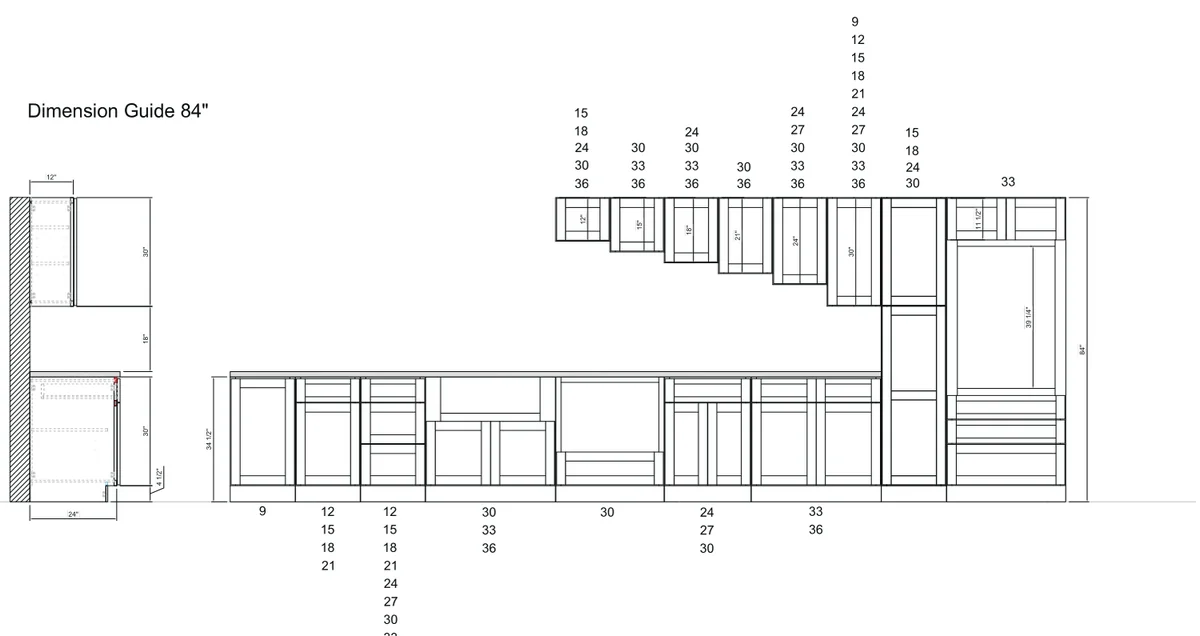
- A printed height alignment guide for 84", 90" and 96" layouts
- The digital brochure and flyer, ready to send or print for clients
- Graph paper, a tape measure and a measuring checklist
- A laptop or tablet to send the SKU list for a quote
Request the materials through the ECG cabinet specification guide page.
Three Small-Space Layouts
Scale the display to the space you have. Each layout below uses the same parts.
| Space | Display | Design table |
|---|---|---|
| One wall in a shared store | Door sample row and two finish boards | Shared counter |
| A small room | Sample wall, finish boards, one working cabinet | Small table for two |
| Room plus storefront | All of the above plus a two-tone vignette | Dedicated table and screen |
Keep the Display Current
A scuffed sample or a missing finish costs trust. Check the display every month.
Replace damaged doors, touch up small chips with the color-matched touch-up kit, update countertop chips, and print fresh copies of the flyer. When a finish trends up, move it to the front wall.
Track which samples go home with clients and which finishes they sign off on. After a season, that list tells you more about your market than any national survey, and it shows which finish deserves the working cabinet on the floor.
Sources
Frequently Asked Questions
How do you display cabinets in a small showroom?
Use a door sample wall in every finish, one working cabinet clients can open, finish boards with counters and hardware, and a design table with the Spec Book.
Do I need full kitchen displays to sell cabinets?
No. Door samples, one real cabinet and good sales materials can carry a small showroom. Full displays help but are not required.
Which cabinet colors should a showroom feature in 2026?
The Houzz 2026 survey found wood and white leading, followed by off-white and green. Put wood and white at eye level and use green as an accent.
How much space does a small cabinet showroom need?
A wall for door samples, one working cabinet and a design table fit in a small room; full kitchen vignettes need several times that space.
Where can a dealer get Shaker door samples for a display?
East Coast Cabinetry Group sells real 11" x 14" Shaker door samples in all four finishes to trade accounts.