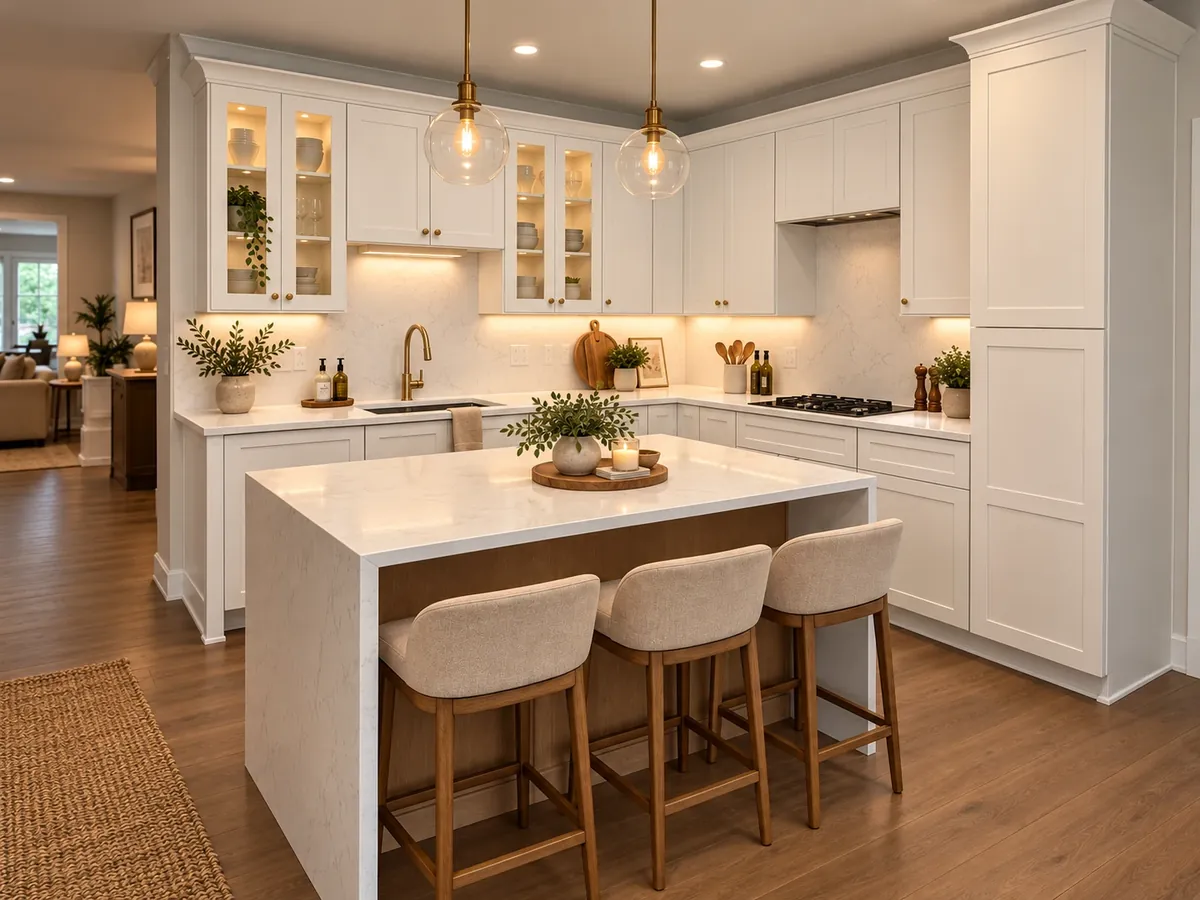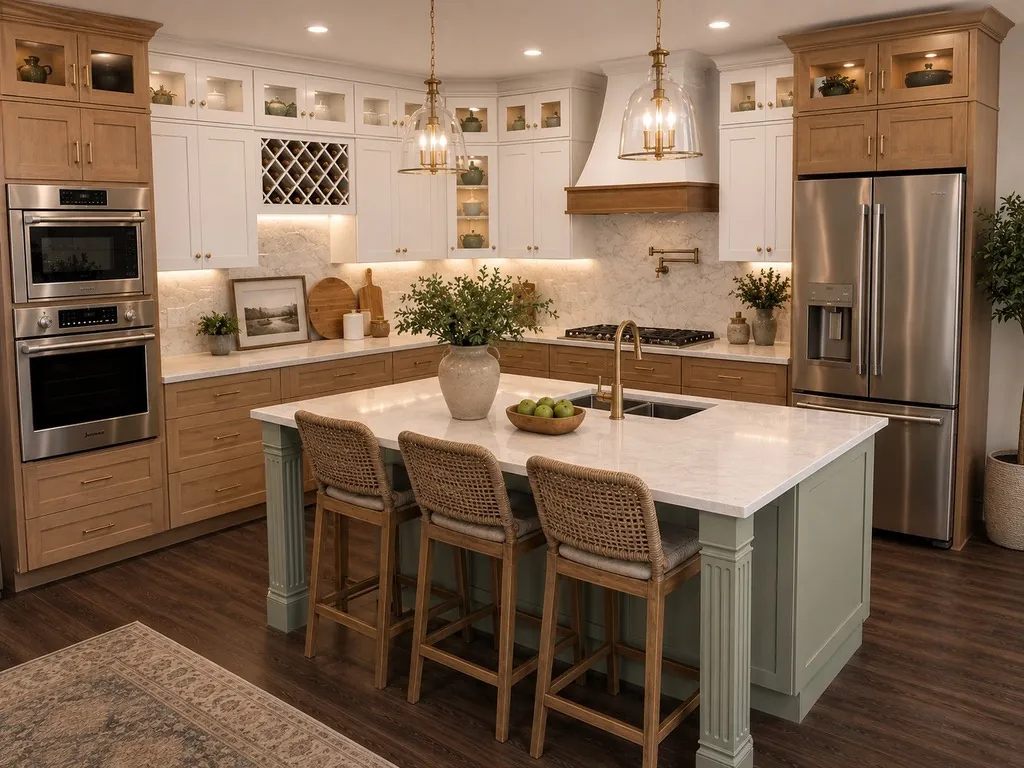
Why are they called Shaker cabinets? The name comes from the Shakers, a religious community in early America known for simple, well-made furniture. Their plain frame-and-panel doors became the model for today's five-piece Shaker cabinet door.
Summary
- The Shakers were a Christian religious group, formally the United Society of Believers in Christ's Second Appearing.
- Shaker furniture was built to be useful, plain and well made.
- The modern Shaker cabinet borrows the Shaker door: a square frame around a flat, recessed panel.
- Frame-and-panel construction handles wood movement.
Who the Shakers Were
The Shakers were a Christian religious group, formally the United Society of Believers in Christ's Second Appearing. They came to America from England in the late 1700s and built communities in New York, New England and later Ohio and Kentucky.
Their nickname came from the shaking and dancing in their worship. They lived communally, valued order and hard work, and made much of what they used by hand, including furniture.
Their communities grew through the 1800s and then declined, but their furniture outlived them. Museums and collectors still keep original Shaker chairs, cupboards and chests, and the name stuck to the style.
What Made Shaker Furniture Different
Shaker furniture was built to be useful, plain and well made. Decoration was seen as unnecessary, so the quality had to show in the proportions and the joinery.
- Simple, straight lines with no carved or applied ornament
- Function first: built-in storage, drawers and pegboards
- Careful joinery, often with dovetails on drawers
- Local woods, finished to show the grain or painted in solid colors
- Frame-and-panel doors with a flat center panel
The Shakers also built furniture to sell, which helped spread the style beyond their own communities.
From Shaker Furniture to the Shaker Cabinet Door
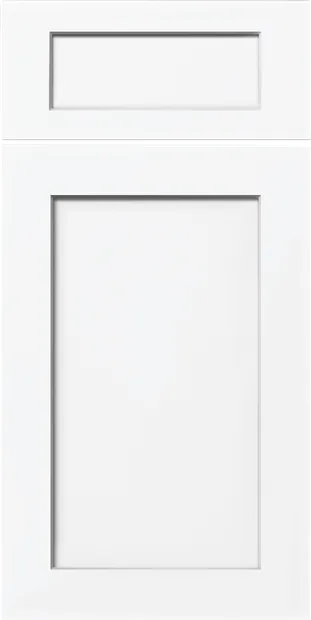
The modern Shaker cabinet borrows the Shaker door: a square frame around a flat, recessed panel. Cabinet makers call it a five-piece door because it uses five parts.
| Piece | Qty | What it does |
|---|---|---|
| Stiles | 2 | Vertical frame pieces on the left and right |
| Rails | 2 | Horizontal frame pieces at the top and bottom |
| Center panel | 1 | Flat panel set into a groove in the frame, recessed below the frame |
The frame carries the strength and the panel fills the opening. It is the same frame-and-panel idea the Shakers used, simplified for production cabinets.
Why Frame-and-Panel Construction Works
Frame-and-panel construction handles wood movement. Solid wood expands and shrinks with humidity, and a panel set in a groove can move without cracking the door.
That is also why it works so well in today's kitchens. A narrow solid frame is stable, and a stable center panel keeps the door flat. ECG Shaker doors use a 5-piece solid wood construction with a 2.5" solid hardwood frame and an engineered center panel, which is less prone to movement than a wide solid board.
Shaker Style Today: What Stayed and What Changed
The look stayed; the build and finish modernized. A Shaker cabinet today keeps the plain frame and recessed panel but adds features the Shakers never had.
| Feature | Shaker furniture (1800s) | ECG Shaker cabinet today |
|---|---|---|
| Door | Frame-and-panel, solid wood | Full overlay 5-piece door, solid wood frame, engineered center panel |
| Drawers | Hand-cut dovetails | 5/8" solid wood dovetail drawers |
| Hardware | Wooden knobs | 6-way adjustable soft-close hinges, full-extension soft-close glides |
| Box | Solid wood | 1/2" premium-grade plywood, birch veneer interior |
| Finish | Oil, varnish or solid paint | UV-cured finish in White, Dove, Lightwood or Evergreen |
See every part of the modern box in the cabinet construction specs.
Today the same frame-and-panel door is finished in a factory: ECG seals its painted doors with UV curing, which hardens the finish with ultraviolet light.
How to Recognize a Shaker Door
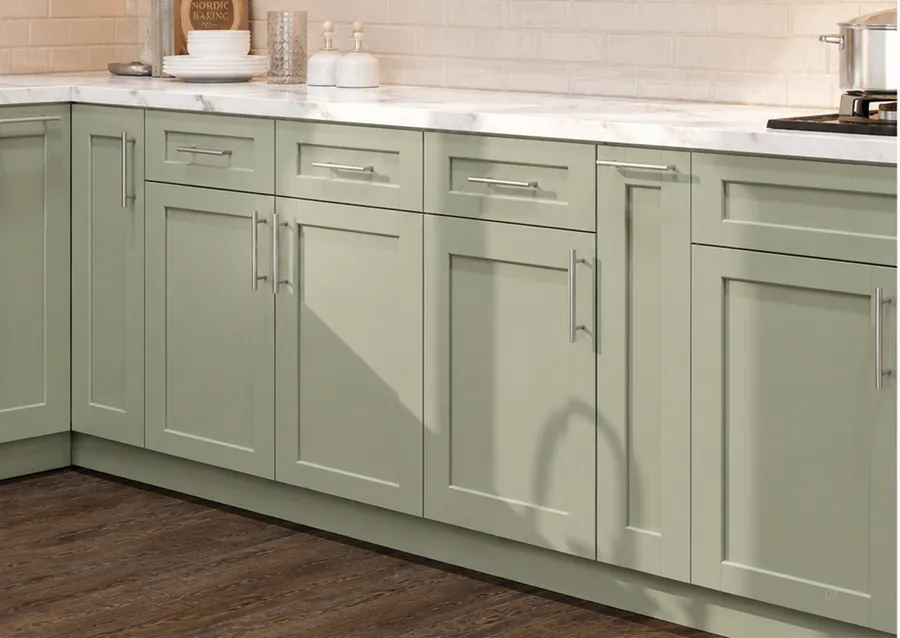
A Shaker door has a square frame, a flat recessed panel and no decorative profile. If the frame has curves, beads or a raised center, it is a different style.
- Five pieces: two stiles, two rails and one center panel
- A flat center panel set below the face of the frame
- Square inside edges on the frame, with no ogee or bead
- Rails and stiles of similar width around the panel
- Drawer fronts that may be five-piece or a flat slab, depending on the height
Today you will also see variations. Slim or micro Shaker uses a narrower frame. Inset Shaker sits inside the face frame instead of over it. ECG doors are full overlay, so the door covers almost all of the face frame for a clean, continuous look across the run. Overlay and frame width change the look, but the frame-and-panel idea is the same one the Shakers used.
Why Shaker Cabinets Stay Popular
Shaker stays popular because the plain door suits almost any kitchen. With cup pulls it looks traditional; with slim bar pulls and a flat countertop it looks modern.
A secondary source reporting the Houzz 2026 study puts Shaker at 58% of new cabinet doors. For what that means for color and style choices, read whether Shaker cabinets are going out of style.
ECG stocks one Shaker door in four finishes, Shaker White, Dove, Lightwood and Evergreen, in about 210 SKUs. Compare them on the wholesale Shaker cabinets page.
Sources
Frequently Asked Questions
Where does the name Shaker come from?
From the Shakers, a religious group in early America whose nickname came from the shaking and dancing in their worship. Their simple furniture gave the cabinet style its name.
What is the difference between Shaker cabinets and flat panel cabinets?
A Shaker door is a five-piece door with a frame around a recessed flat panel. A slab or flat panel door is one flat piece with no frame.
Are Shaker cabinets made of solid wood?
It depends on the maker. ECG Shaker doors are 5-piece solid wood with an engineered center panel on a solid hardwood frame, over a plywood box.
Who were the Shakers?
A Christian religious community founded in England in the 1700s that settled in the United States, known for simple, well-made furniture.
Why are Shaker cabinets so popular?
The plain five-piece door fits traditional, transitional and modern kitchens, and it works with almost any color or hardware.